
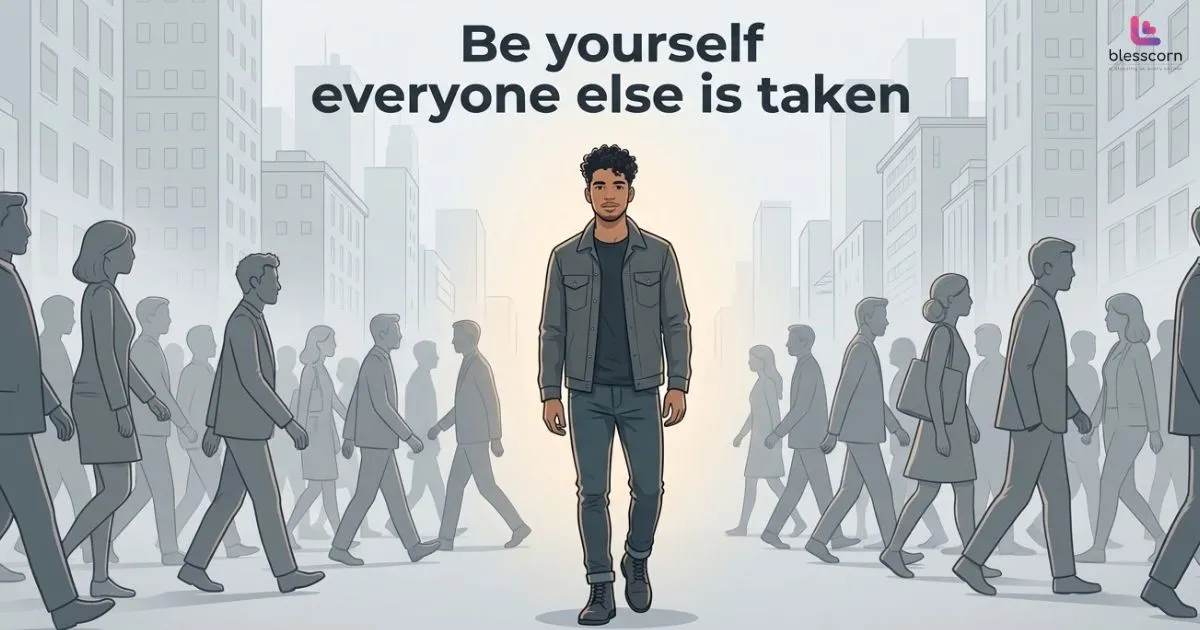
You hear it all the time: “Be yourself, everyone else is taken.” But what does this statement really mean? This simple quote carries a powerful message about individuality, confidence, and self-acceptance. Many people try to copy others to fit in. They follow trends, change their opinions, and hide their real thoughts because they fear being judged. However, pretending to be someone else can leave you feeling unhappy and disconnected from your true identity.
The truth is that nobody else has your exact combination of skills, dreams, experiences, and personality traits. You do not need to become someone else to be worthy of love and respect. Instead, learning to accept yourself can help you build confidence and develop healthier relationships. Being yourself does not mean you never change or improve. It means growing into a better version of yourself without losing the qualities that make you unique.
In this article, we will explore why copying others often fails, how to discover your true self, and why authenticity helps you build meaningful relationships. You will also learn simple ways to stop comparing yourself with others and start living more confidently. Remember, being yourself is not selfish. It is a brave step toward a more honest and fulfilling life. Take a deep breath, let go of unnecessary pressure, and begin your journey toward embracing who you really are.
Why Copying Others Always Fails
Imagine walking around in shoes that are two sizes too small. That is what pretending to be someone else can feel like. You squeeze into another person’s personality, laugh at jokes you do not understand, and agree with opinions you do not share. This act might help you fit in temporarily, but it can become exhausting over time. You may start questioning your decisions, hiding your interests, and worrying about what other people think of you.
Copying others can also prevent personal growth. When you spend too much time trying to imitate someone else’s life, you leave less room to discover your own strengths and interests. You might avoid learning a new skill because your friends do not share that interest. You might also give up on a dream because someone else considers it unusual. Gradually, the fear of judgment can become stronger than your desire to explore new opportunities.
Another problem is that comparison often creates unrealistic expectations. Social media shows carefully selected moments from people’s lives, including achievements, vacations, relationships, and professional success. You rarely see every disappointment or difficult moment behind those pictures. Comparing your everyday life with someone else’s highlights can make you feel that you are falling behind, even when you are making meaningful progress.
Pretending can also affect your relationships. People may struggle to understand the real you if you constantly change your personality to please them. Strong friendships and relationships grow through honesty, respect, and shared experiences. You do not have to agree with everyone or hide every difference to be accepted.
Instead of copying others, start with small acts of authenticity. Share your honest opinion about a movie, wear something that makes you comfortable, or try a hobby that genuinely interests you. You do not need to prove anything to anyone. Each small decision can help you become more comfortable with your identity.
Remember, the goal is not to reject every trend or ignore useful advice. You can learn from successful people without becoming their copy. Take inspiration from others, but choose the ideas that fit your values and goals. When you understand this difference, you can grow without losing your individuality.
Simple Steps to Discover Your True Self
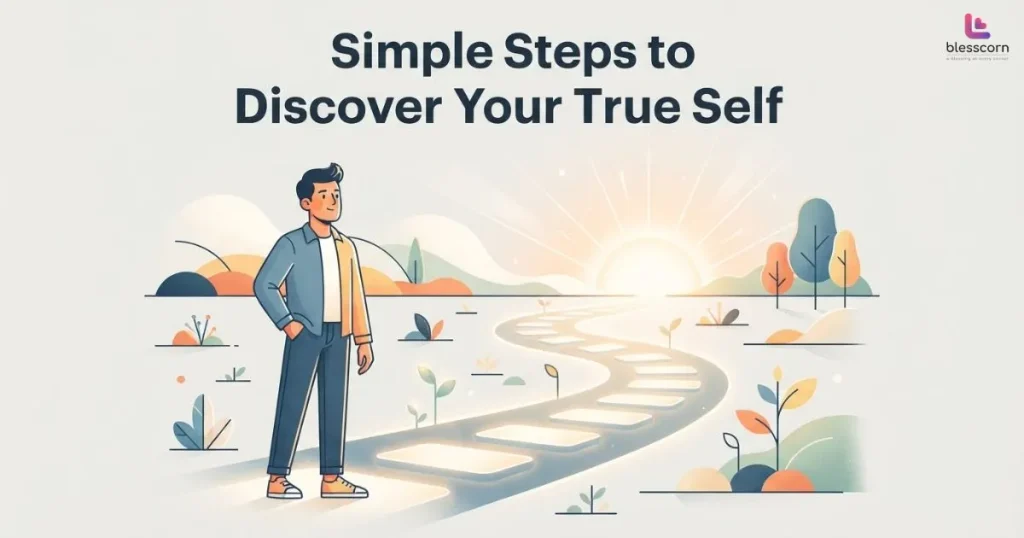
Discovering your true self does not require a dramatic life change. You can begin with a few simple habits that help you understand your thoughts, feelings, interests, and personal values. The first step is to give yourself time to think without outside distractions.
Start by spending ten minutes alone each day. Turn off your phone, find a quiet place, and ask yourself, “What do I genuinely enjoy?” Write down three things that make you happy. Your answers might include reading, drawing, cooking, helping others, or taking peaceful walks. Do not judge your interests or compare them with anyone else’s. The purpose is to understand what matters to you.
Second, try something new that reflects your interests. You might learn a creative skill, join a club, explore a different hobby, or start a small project. New experiences help you discover abilities you may not have recognized before. Even if something does not work out, you gain valuable information about yourself.
Third, stop comparing your journey with other people’s progress. Everyone develops at a different pace, and success does not look the same for everyone. Someone else may reach a career goal before you, while you may be developing skills, building relationships, or discovering a different direction. Focus on your own progress instead of measuring your worth against someone else’s achievements.
Fourth, spend time with people who respect your personality. A supportive friend will not expect you to change everything about yourself to earn acceptance. Share your interests, talk honestly about your feelings, and notice how people respond. Healthy relationships give you room to express yourself without constant fear of criticism.
Fifth, learn to say no when something goes against your values or personal boundaries. You do not have to accept every invitation, follow every suggestion, or agree with every opinion. Saying no respectfully can protect your time and energy. It also helps you make choices that reflect your real priorities.
Sixth, celebrate the qualities that make you different. Perhaps you are naturally curious, enjoy unusual hobbies, think creatively, or notice small details that others overlook. These qualities do not need to impress everyone to be valuable. Your individuality is not a problem that needs to be fixed.
Finally, practice self-acceptance. You will make mistakes, experience doubts, and occasionally wish you had handled a situation differently. That is part of being human. Instead of criticizing yourself for every mistake, ask what you can learn from it. Self-acceptance allows you to acknowledge your weaknesses while continuing to improve.
With time, these habits can help you feel more comfortable with your identity. You may find it easier to express your opinions, make independent decisions, and pursue goals that matter to you. Discovering yourself is an ongoing process, so give yourself permission to grow and change naturally.
How Authenticity Attracts Better Relationships
Being yourself can help you develop relationships built on honesty, trust, and mutual respect. Think about your closest friends. You probably appreciate their individual personalities, including their unusual habits, different opinions, and little imperfections. You do not need them to be exactly like you to value their company. The same principle applies to the way others connect with you.
When you accept your true self, you make it easier for others to understand who you are. You can share your interests, express your feelings, and communicate your needs without constantly pretending. This openness gives relationships a stronger foundation because people can respond to the real person rather than a personality created to impress them.
Authenticity also encourages emotional honesty. For example, you might tell a trusted friend, “I feel sad today,” instead of pretending that everything is fine. You can ask for support when you need it and offer support when someone else struggles. These small moments of honesty can strengthen your connection and create a greater sense of trust.
However, being authentic does not mean saying everything that comes to mind without considering other people’s feelings. You can express your opinions while remaining kind and respectful. You can disagree without insulting anyone, set boundaries without being cruel, and acknowledge mistakes without losing your self-respect. Genuine confidence includes understanding that other people deserve the same respect you expect from them.
Another benefit is that authenticity helps you recognize relationships that may not be right for you. Some people may not share your interests or understand your choices, and that is perfectly normal. You do not need universal approval to live a meaningful life. Instead, look for relationships in which people appreciate your values, respect your boundaries, and encourage your growth.
Start by being more present in your conversations. Put away your phone, listen carefully, and share your thoughts honestly. Ask questions because you genuinely want to understand the other person. These actions can make your conversations more meaningful and help both people feel heard.
Over time, authentic communication can help you build a stronger support network. You will have more opportunities to connect with people who appreciate your personality rather than a version of yourself designed to please everyone. Real connection does not require perfection. It requires honesty, understanding, and a willingness to accept one another.
Conclusion
Staying true to yourself is a habit you develop over time, not a decision that makes every fear disappear overnight. Some days, you may feel confident about your choices. On other days, you may worry about judgment or wonder whether you should change to fit in. Those feelings are normal. What matters is learning to make decisions that reflect your values instead of allowing fear to control your life.
The phrase “be yourself everyone else is taken” reminds us that each person has a unique identity. Your voice, experiences, interests, dreams, and sense of humor contribute to the person you are. You do not need to hide these qualities to become more acceptable to others. You can learn from people, welcome constructive feedback, and improve your weaknesses while still respecting your individuality.
Being yourself also means recognizing that personal growth and self-acceptance can exist together. You can work toward your goals without believing that you are not good enough today. You can admit mistakes without defining yourself by them. Most importantly, you can change your mind when you learn something new without feeling that you have lost your identity.
Start with one honest action today. Express an opinion you genuinely believe, spend time on something you enjoy, or set a boundary that protects your well-being. Notice how it feels to make a choice that reflects your real priorities. Small actions can gradually help you build confidence and develop a life that feels more meaningful.
You do not have to be perfect, impress everyone, or follow someone else’s path. Your journey belongs to you. Keep learning, keep growing, and give yourself permission to be an individual. The world does not need another copy of someone else. It needs people who are willing to bring their own ideas, experiences, and perspectives into it.
So, take a deep breath, stand tall, and embrace the person you are becoming. Be yourself, not because you have nothing left to improve, but because you deserve to grow without pretending to be someone else.
1. What does “Be yourself, everyone else is taken” mean?
It means embracing your personality, values, and individuality instead of copying others to gain approval. Everyone has a unique combination of experiences, interests, and qualities that makes them different.
2. Why did Oscar Wilde say “Be yourself, everyone else is taken”?
The quote encourages people to value their individuality rather than imitate others. Although it is widely attributed to Oscar Wilde, reliable evidence confirming that he originally said it has not been established.
3. What is Oscar Wilde’s most famous quote?
Oscar Wilde is known for many witty and memorable sayings, including lines from The Importance of Being Earnest and The Picture of Dorian Gray. “Be yourself, everyone else is taken” is commonly attributed to him, but that attribution is disputed.
4. Who made the quote “Be yourself, everyone else is taken”?
The original author of “Be yourself, everyone else is taken” has not been reliably established. The saying is popularly attributed to Oscar Wilde, but there is insufficient evidence to confirm that he wrote or said it.
5. What were Oscar Wilde’s last words before he died?
Oscar Wilde’s reported last words were, “Either that wallpaper goes, or I do.” The famous anecdote is often repeated, but its historical accuracy has not been definitively verified.
6. Why is Oscar Wilde a queer icon?
Oscar Wilde is regarded as a queer icon because of his same-sex relationships, his 1895 conviction for “gross indecency,” and his lasting influence on LGBTQ+ history and culture. His life and experiences have become an important part of discussions about identity, social prejudice, and freedom of expression.

Welcome to Blesscorn, I am khafsa Abbasi, an AI Powered SEO, Content Writer with one year experience. I help websites Rank higher, grow traffic and look amazing.my goal is to help people in SEO , Content writing so contact me and lets achieve together .
1 thought on “Be Yourself, Everyone Else Is Taken: 7 Ways to Embrace Your True Self”